All news
HOW TO PUBLISH IN INTERNATIONAL PEER-REVIEWED PUBLICATIONS
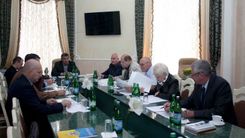
It was on this topic that on April 4, 2016, the Ministry of Education and Science of Ukraine organized a training for scientific and pedagogical, research workers and postgraduate students, which was held at the Odessa National University named after I.I. Mechnikov. The training was conducted with the support of the Fulbright Program Office in Ukraine.
Members of the Association of Scientists and Specialists in the Field of Operational and Investigative Activities took an active part in the training.
At the beginning of the event, a representative of the Fulbright-Clinton Program, Alexis Ramos, made a welcoming speech, emphasizing the usefulness of this event for the professional development of each scientist. The latter emphasized the presence of representatives of the Ministry of Education and Science of Ukraine and the Department of Certification of Highly Qualified Personnel at the training.
A report on the topic "How and why is it necessary to publish in international publications?" was delivered by Fulbright Leadership and Empowerment Scholar Michelle Vasquez, who noted that in order for a scientific article to be published in a foreign journal, it must be original, innovative, based on sufficient research, and contain quality references to the literature. It is also very important to learn how to identify a quality foreign journal.
Separately, criticism of a scientific article was noted, which should be perceived as a normal phenomenon. “After all, people who criticize “care” about you. They point out your mistakes, by removing which you improve. Look for people who will criticize your scientific works,” the speaker emphasized. No less interesting was the report of the US Department employee Thaddeus McClearly “Academic Writing”.
First of all, he noted that plagiarism should be understood as any phrase, sentence that the author borrowed without referring to an official source. There are three types of plagiarism: 1) text rewritten word for word; 2) text rewritten partially, using your own words elsewhere; 3) text expressed in your own words, but the idea (concept) remains borrowed. Also, the speaker added that plagiarism includes the transfer of someone else’s idea, even if a few words are replaced or rearranged. The 10 reasons given in the report for not accepting a scientific article for an international peer-reviewed publication are worth noting:
1) the title of the article does not correspond to the content;
2) the purpose of the research remains unclear or is at odds with the research methods;
3) the research methods do not match the results obtained;
4) the presence of grammatical or lexical errors in the scientific article;
5) the text of the article is not presented in a scientific style;
6) there is a deviation from the subject of the research;
7) the data provided is outdated;
8) there is plagiarism;
9) the structure of the article is broken;
10) local research results do not have a logical connection with the final conclusions.
At the end of the report, Thaddeus McCleary defined an algorithm of actions before writing a scientific article, which consists of answers to the questions: “What do I know about this topic?”, “Why is this topic so important?”, “How to do it?”, “What research has already been conducted on this topic?”, “What results were obtained during the research on this topic?”. Regarding the equally important issue of translating a scientific article into a foreign language, the speaker noted the website https://lang-8.com/, with the help of which the author has the opportunity to write an article in a foreign language at any level of proficiency, send it to the specified site, where native speakers of the foreign language will correct errors for free and send the article back.
During the report “Roadmap to Publication and Maximizing Your Chances of Publication,” Fulbright graduate student Nathan Pickett pointed out some websites that will be useful for every scientist, namely https://www.h-net.org, http://www.lsoft.com/catalist.html (for searching for foreign journals), http://gen.lib.rus.ec (for searching for books), https://sci-hub.io (for searching for scientific articles), www.scimagojr.com/journalrank.php (for searching for a journal by field), http://www.journalmetrics.com (for searching for special journals), etc.
At the same time, the speaker focused in detail on the direct selection of an international peer-reviewed journal. Thus, Nathan Pickett provided the following advice on this matter:
1) get acquainted with a number of articles of the chosen journal over the past few years;
2) talk to colleagues, maybe some of them have already been published there;
3) review the journal articles and their citation index;
4) choose the style of writing the article, decide on the title;
5) determine the keywords and abstract for the article;
6) find out the relevance of the chosen topic;
7) take into account that a very large or very small volume is bad;
8) determine whether the structure of the article is understandable;
9) determine whether the sentences in the article are understandable;
10) use the “correct” sources, because many foreign editors, if they find plagiarism in the article, make a corresponding mark in the database. This also applies to the deadlines for submitting the article, so it is worth adhering to them. Also, the speaker added that it is not recommended to send the same article to the same foreign journal.
Tetyana Yaroshenko, President of the Ukrainian Alumni Association of the Fulbright Scholars Association, gave a presentation on “Scientific Communication,” under which she proposed to understand the “registration” of a new idea or research, “certification” of the quality of research, informing about the research and its results (through publication in a scientific journal), “archiving” of research results for future access and use.
The speaker noted that today science is turning into a competition in the number of publications, citations, and the growth of bibliometric indicators (Hirsch index, etc.). However, the questions “What areas of research are relevant?”, “Are we going to reinvent the wheel?”, “Who finances such research?”, “How to find fellow scientists?”, “What are the scientific journals in this field?”, “Which of these journals are the most influential?”, etc. remain open. The speaker called for finding answers to these and other questions using the most authoritative databases of scientific literature, equipped with tools for tracking and analyzing the citation rate of scientific works - Web of Science and Scopus. It is with the help of these scientometric databases that it is possible to identify leading journals, conferences in a specific narrow field, the strengths of the university, promising young scientists, and areas for establishing productive cooperation.
Today, as Tetyana Yaroshenko noted, each scientist should also take care of his or her ID - a unique identifier of scientific authors, which solves the problem of correctly recognizing documents of a specific author. You can get an ID by registering on the website http://orcid.org. The speaker advised universities to develop their own scientific journals, which are indexed by the WoS and Scopus databases.
At the end of the report, Thaddeus McCleary defined an algorithm of actions before writing a scientific article, which consists of answers to the questions: "What do I know about this topic?", "Why is this topic so important?", "How to do it?", "What research has already been conducted on this topic?", "What results were obtained during the research on this topic?". Regarding the equally important issue of translating a scientific article into a foreign language, the speaker noted the website https://lang-8.com/, with the help of which the author has the opportunity to write an article in a foreign language at any level of proficiency, send it to the specified site, where native speakers of the foreign language will correct errors for free and send the article back.
During the report “Roadmap to Publication and Maximizing Your Chances of Publication,” Fulbright graduate student Nathan Pickett pointed out some websites that will be useful for every scientist, namely https://www.h-net.org, http://www.lsoft.com/catalist.html (for searching for foreign journals), http://gen.lib.rus.ec (for searching for books), https://sci-hub.io (for searching for scientific articles), www.scimagojr.com/journalrank.php (for searching for a journal by field), http://www.journalmetrics.com (for searching for special journals), etc.
At the same time, the speaker focused in detail on the direct selection of an international peer-reviewed journal. Thus, Nathan Pickett provided the following advice on this matter:
1) get acquainted with a number of articles of the chosen journal over the past few years;
2) talk to colleagues, maybe some of them have already been published there;
3) review the journal articles and their citation index;
4) choose the style of writing the article, decide on the title;
5) determine the keywords and abstract for the article;
6) find out the relevance of the chosen topic;
7) take into account that a very large or very small volume is bad;
8) determine whether the structure of the article is understandable;
9) determine whether the sentences in the article are understandable;
10) use the “correct” sources, because many foreign editors, if they find plagiarism in the article, make a corresponding mark in the database. This also applies to the deadlines for submitting the article, so it is worth adhering to them. Also, the speaker added that it is not recommended to send the same article to the same foreign journal.
Tetyana Yaroshenko, President of the Ukrainian Alumni Association of the Fulbright Scholars Association, gave a presentation on "Scientific Communication," under which she proposed to understand the "registration" of a new idea or research, "certification" of the quality of research, informing about the research and its results (through publication in a scientific journal), "archiving" of research results for future access and use.
The speaker noted that today science is turning into a competition in the number of publications, citations, and the growth of bibliometric indicators (Hirsch index, etc.). However, the questions "What areas of research are relevant?", "Are we going to reinvent the wheel?", "Who finances such research?", "How to find fellow scientists?", "What are the scientific journals in this field?", "Which of these journals are the most influential?", etc. remain open. The speaker called for finding answers to these and other questions using the most authoritative databases of scientific literature, equipped with tools for tracking and analyzing the citation rate of scientific works - Web of Science and Scopus. It is with the help of these scientometric databases that it is possible to identify leading journals, conferences in a specific narrow field, the strengths of the university, promising young scientists, and areas for establishing productive cooperation.
Today, as Tetyana Yaroshenko noted, each scientist should also take care of his or her ID - a unique identifier of scientific authors, which solves the problem of correctly recognizing documents of a specific author. You can get an ID by registering on the website http://orcid.org. The speaker advised universities to develop their own scientific journals, which are indexed by the WoS and Scopus databases.
COOPERATION WITH THE EUROPEAN POLICE COLLEGE (CEPOL)
The Odessa State University of Internal Affairs hosted a ceremony to award certificates to members of the Association of European Police Exchange Programme under the auspices of the European Police College (CEPOL).
Thus, from 12 to 17 July 2015, Candidate of Law, Associate Professor, Police Lieutenant Colonel Andriy Kholostenko visited Riga (Republic of Latvia) to take part in a meeting dedicated to “External Manifestations in the Areas of Freedom, Security and Justice”. The programme of this event included a bilateral exchange of senior police officers, experts, police instructors, scientists, representatives of other law enforcement agencies and officials from potential candidate countries and Eastern Partner countries.
During the official visit, the work of law enforcement agencies of European countries, investigation of criminal cases, specifics of detecting corruption crimes, as well as the results of foreign scientific research in the field of anti-corruption activities were familiarized with.
During the celebrations, the Deputy Chairman of the Association, Candidate of Law, Associate Professor, Police Colonel Serhiy Albul expressed hope for continued close cooperation with the European Police College (CEPOL) in the future.

ADDITIONAL BOOK TO THE PRINTED SERIES "THEORY AND PRACTICE OF ORD"
A new textbook prepared by members of the Association "Fundamentals of Operational and Investigative Activities" / S.V. Albul, S.V. Andrusenko, R.V. Mukoida, D.O. Nozdrin; general editor S.V. Albula. - Odesa: ODUVS, 2016. - 300 p. - with illustrations. (Series: Theory and Practice of ORD).
The reviewers of the educational publication were:
Tarasenko V.E. Leading Researcher of the Research Laboratory for Law Enforcement Activities of the NNIZDN of the Odessa State University of Internal Affairs. Doctor of Law, Professor. Member of the All-Ukrainian Association of Scientists and Specialists in the Field of Operational and Investigative Activities;
Stashchak M.V. Associate Professor of the Department of Operational and Investigative Activities of the Kharkiv National University of Internal Affairs. Candidate of Law, Senior Researcher;
Domnytsak R.V. Deputy Chief - Chief of the Criminal Police of the State Police Headquarters in the Lviv Region. Police Colonel.
The textbook reveals the structure of the academic discipline "Fundamentals of Operational and Investigative Activities", contains a presentation of lecture material on the topics:
— History of operational and investigative activities. Formation of the theory of operational and investigative activities as an independent branch of scientific knowledge;
— Concepts, tasks and principles of operational and investigative activities;
— Legal basis of operational and investigative activities. Guarantees of legality during the implementation of operational and investigative activities;
— Subjects and participants of operational and investigative activities, their legal status;
— Rights and obligations of units that carry out operational and investigative activities;
— Grounds and terms for conducting operational and investigative activities;
— Use of the results of operational and investigative activities;
— Information and analytical support of operational and investigative activities;
— Control and supervision of operational and investigative activities.
An indicative list of essay topics, questions for final control and test tasks is provided.
The textbook will be useful for employees of practical units of the National Police of Ukraine, as well as cadets, students and teachers of legal educational institutions.

ADDITIONAL BOOK TO THE PRINTED SERIES "THEORY AND PRACTICE OF ORD"
A new textbook prepared by members of the Association has been published
"Fundamentals of Operational and Investigative Activity" / S.V. Albul, S.V. Andrusenko, R.V. Mukoida, D.O. Nozdrin; ed. by S.V. Albula. – Odesa: ODUVS, 2016. – 300 p. – with illustrations (Series: Theory and Practice of ORD).The reviewers of the educational publication were:
Tarasenko V.E. Leading Researcher of the Scientific Research Laboratory for Law Enforcement Activities of the NNIZDN of the Odessa State University of Internal Affairs. Doctor of Law, Professor. Member of the All-Ukrainian Association of Scientists and Specialists in the Field of Operational and Investigative Activity;
Stashchak M.V. Associate Professor of the Department of Operational and Investigative Activities of the Kharkiv National University of Internal Affairs. Candidate of Law, Senior Researcher;
Domnytsak R.V. Deputy Chief - Chief of the Criminal Police of the State Police Department in the Lviv Region. Police Colonel.
The textbook reveals the structure of the academic discipline "Fundamentals of Operational and Investigative Activities", contains a presentation of lecture material on the topics:
— History of operational and investigative activities. Formation of the theory of operational and investigative activities as an independent branch of scientific knowledge;
— Concept, tasks and principles of operational and investigative activities;
— Legal basis of operational and investigative activities. Guarantees of legality during the implementation of operational and investigative activities;
— Subjects and participants of operational and investigative activities, their legal status;
— Rights and obligations of units that carry out operational and investigative activities;
— Grounds and terms for conducting operational and investigative activities;
— Use of the results of operational and investigative activities;
— Information and analytical support of operational and investigative activities;
— Control and supervision of operational and investigative activities.
An indicative list of essay topics, questions for final control and test tasks is provided.
The textbook will be useful for employees of practical units of the National Police of Ukraine, as well as cadets, students and teachers of legal educational institutions.
The role and place of law enforcement agencies in building a democratic state based on the rule of law
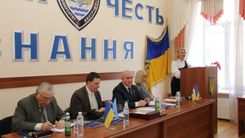
On March 25, 2016, the Odessa State University of Internal Affairs hosted the VIII International Scientific and Practical Conference “The Role and Place of Law Enforcement Agencies in Building a Democratic Rule of Law State”. The conference organizers included members of the All-Ukrainian Association of Scientists and Specialists in the Field of Operational and Investigative Activities.
The organizing committee of the conference included: Deputy Chairman of the Association, Candidate of Law, Associate Professor Albul S.V., members of the Association – Candidate of Law, Associate Professor Andrusenko S.V., Candidate of Law, Associate Professor Kholostenko A.V., Candidate of Law, Associate Professor Shelekhov A.O.
The plenary session began with a tribute to the memory of Doctor of Law, Professor, Honored Worker of Science and Technology of Ukraine, Corresponding Member of the National Academy of Legal Sciences of Ukraine, retired police colonel Vasyl Dmytrovych Bernaz.
At the beginning of the event, the First Vice-Rector of the Odessa State University of Internal Affairs, Deputy Chairman of the Association, Candidate of Law, Associate Professor Serhiy Albul addressed the guests and participants of the conference with an introductory speech and greetings.
He emphasized the importance of the participation of law enforcement agencies in the development of a democratic legal state, which is, as never before, relevant and important for the entire society, but requires certain changes, unity and legal protection. “Being in the process of democratic state-building, Ukraine, from the very beginning of its emergence as an independent state, resolutely abandoned the principles, methods and means of the totalitarian past it experienced in the 20th century, choosing the path of building statehood on the principles of humanism, democracy, protection of the rights and freedoms of citizens. Such a strategy and understanding of the goals, principles and tasks of law enforcement agencies also determine the perspective positions for the further development of the Ukrainian police,” the first vice-rector noted.
The floor was then given to Doctor of Philosophy Petr Pojman, a member of the committee of the Czech Criminological Society, responsible for PSSI projects in Ukraine.
The foreign guest spoke about the problems of verifying the reliability of state officials in the Czech Republic and possible anti-corruption tools for Ukraine.
The work of the conference was organized within the framework of the following sections:
- Socio-legal and economic problems of state development: priorities and prospects.
- Current problems of administrative law and administrative process.
- Current problems of administrative activities of the National Police of Ukraine.
- Current problems of professional training of law enforcement officers.
- Current problems of criminal proceedings and operational-search activities. Current problems of criminal law, criminal-executive law and criminology.
The head of section No. 5 “Current problems of criminal proceedings and operational-search activities” was the member of the Association, Doctor of Law, Professor Sahakyan M.B.
During the conference, members of the Association presented scientific reports on the following topics:
— Albul S.V. “Categories of “intelligence information” and “criminal intelligence information” in the context of implementing the intelligence function of the operational and investigative activities of the National Police of Ukraine”;
— Vodko M.P. “Certain issues of forming a policy of combating criminal offenses in Ukraine (operational and investigative aspect)”;
— Gribov M.L. “Organization of the activities of operational units: the essence and practical significance of the scientific category”;
— Zayets O.M. “Features of organizing a pre-trial investigation by an investigator when investigating criminal offenses in the insurance sector”;
— Lyubchyk V.B. “Signs of the general criminal and economic orientation of organized criminal groups”;
— Mukoida R.V. “Features of the tactics of documenting crimes committed using fictitious enterprises”;
— Nozdrin D.O. “On the issue of the prospects for using the polygraph in the system of the Ministry of Internal Affairs of Ukraine”;
— Polyakov E.V. “Beginning of pre-trial investigation: individual problems”;
— Tarasenko V.E. “On the process of forming individual theories in forensics and operational-search activities”;
— Tarasenko R.V. “Establishing the evidentiary value of hidden audio and video recordings as an integral element of the effective fight against corruption crimes”;
— Kholostenko A.V. “Prospects for using service-detective dogs in the investigation of crimes related to illicit gain.”
The conference was attended by scientists from Vinnytsia National Agrarian University, Dnipropetrovsk State University of Internal Affairs, State Research Institute of the Ministry of Internal Affairs of Ukraine, Donetsk Law Institute of the Ministry of Internal Affairs of Ukraine, State Institution "South Ukrainian National Pedagogical University named after K.D. Ushinsky", Zaporizhia National University; Kyiv National University named after Taras Shevchenko, Kyiv National University of Trade and Economics, Kyiv National University of Culture and Arts, Lviv State University of Internal Affairs, National Academy of Internal Affairs, Odessa State University of Internal Affairs, Odessa National Academy of Communications named after A.S. Popov, Odessa National Maritime University, University of the State Fiscal Service of Ukraine, Kharkiv National University of Internal Affairs and employees of practical units of law enforcement agencies of Ukraine.
Foreign guests presented educational institutions and law enforcement agencies from the Czech Republic, Azerbaijan, Moldova, and Bulgaria.
ATTENTION OF THE ASSOCIATION BOARD MEMBERS!
On April 29, 2016, a meeting of the Board of the All-Ukrainian Association of Scientists and Specialists in the Field of Operational and Investigative Activities will be held in Odesa at the Odessa State University of Internal Affairs.
The meeting will address issues related to the consideration of the draft Work Plan of the Association for 2016, the selection and discussion of promising areas of the Association's activity.
Sincerely,
Chairman of the All-Ukrainian Association of Scientists and
Specialists in the Field of Operational and Investigative Activities O.E. Korystin
Members of the Association participated in a scientific and practical conference
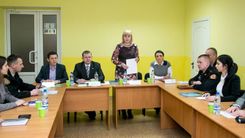
On March 11, the Cherkasy Institute of Fire Safety named after the Heroes of Chernobyl of the National University of Fire Safety of Ukraine hosted the 1st All-Ukrainian Scientific and Practical Conference of Cadets, Students, Adjuncts and Applicants “Organizational, Management, Economic, Psychological and Pedagogical Aspects of Ensuring the Activities of the Unified State System of Civil Protection (USCS)”.
The conference was attended by scientists from the National University of Civil Protection of Ukraine, Lviv State University of Life Safety, Odessa State University of Internal Affairs, Bohdan Khmelnytskyi Cherkasy National University, Cherkasy State Technological University, V. Stashys Institute of Law of the Classical Private University (Zaporozhye), Research, Design and Technological Institute of Macrography, Cherkasy Branch of the European University, Cherkasy Medical College. In total, more than a hundred participants took part in the scientific and practical conference.
The work of the scientific and practical conference was held in five sections: Organizational and managerial aspects of ensuring the activities of the Unified State Civil Protection System; Psychological, pedagogical and medical aspects of ensuring the activities of the Unified State Civil Protection System; Organization of financial and material and technical support of the Unified State Civil Protection System; Regulatory and legal regulation of the Unified State Civil Protection System; Documentation support of the administrative activities of the Unified State Civil Protection System.
Following the results of the plenary and sectional meetings of the conference, the participants developed and approved a resolution, the key provisions of which outline ways to improve the provision of the activities of the Unified State Civil Protection System.

WE COMMIT…
The Board of the Association of Scientists and Specialists in the Field of Operational and Investigative Activities announces with great sadness that on March 14, 2016, prematurely, at the age of 67,
Doctor of Law, Professor,
Honored Worker of Science and Technology of Ukraine,
Corresponding Member of the National Academy of Legal Sciences of Ukraine,
Retired Police ColonelBERNAZ VASYL DMYTROVYCH

PRESENTATION OF THE BOOK OF SHEVCHENKO LAUREATE OLEG SENTSOV
The presentation of the book "Buy the Book - It's Funny" by Shevchenko Prize laureate Oleg Gennadiyovich Sentsov took place at the Odessa State University of Internal Affairs.
The book was presented by the famous TV presenter, journalist, writer, Doctor of Historical Sciences, Honored Journalist of Ukraine Danylo Yanevsky.
The event was attended by the Deputy Chairman of the All-Ukrainian Association of Scientists and Specialists in the Field of Operational and Investigative Activities, Candidate of Law, Associate Professor Serhiy Albul, the Chief Editor of the Historical Almanac "Southwest. Odessa", Candidate of Historical Sciences, Associate Professor Viktor Savchenko, and the Editor of the "Life Code" project, Ivanna Openko.
Oleg Sentsov is a Ukrainian film director, writer and public figure who, while in the territory of annexed Crimea, actively assisted our military and defended the interests of the Ukrainian state. In May 2014, he was detained by Russian special services in the territory of annexed Crimea and illegally convicted on trumped-up charges. In November last year, the Supreme Court of Russia, after considering an appeal against the sentence of Ukrainian director Oleg Sentsov and activist Oleksandr Kolchenko, upheld the decision of the North Caucasus Court.
According to the court verdict, Oleg Sentsov was sentenced to 20 years in prison, and Oleksandr Kolchenko to 10 years. In early 2016, Oleg Sentsov became the laureate of the Shevchenko Prize.
The humorous adventure novel “Buy a Book – It’s Funny” was written by Oleg Sentsov before the annexation of Crimea and the verdict of the so-called Russian “Themis”, so the topic of politics is absent in the book. According to Danylo Yanevsky, Oleg Sentsov’s novel is an easy-to-read work, and its content fully corresponds to the title. The novel tells the story of three men who could make any wish come true. This is a completely unconventional book for the Ukrainian reader, it is positive humor, it is a story that takes place in Africa with three Americans. The novel was published in the original language – Russian, but soon they plan to translate the book into Ukrainian.
As Danylo Yanevsky noted, the unjustly convicted Oleg Sentsov not only did not lose his face, but instead he became a model of civic courage, patriotism, indomitability and human dignity!

OUR DEAR WOMEN!
On behalf of the Board of the Association of Scientists and Specialists in the Field of Operational and Investigative Activities and on my own behalf, I congratulate the entire beautiful half of humanity on the Day of Women, Spring and Beauty!
With a barely perceptible breath of spring, a wonderful women's holiday comes to us - March 8. This day brings tenderness and beauty into the world. After all, everything that is most precious in our lives - happiness, joy, hope, love, is associated with a woman.
Without you, there would not be so much light, love and warmth. You fill everyday life with bright colors, encourage noble deeds and good deeds. The generosity of your souls warms, the strength of spirit - captivates, and beauty - instills faith in the fact that the world will be saved...
May your every day be sunny and joyful, may love and harmony reign around you, and flowers bloom and music sounds in your honor.
I wish each of you to always be smiling, full of hope and optimism, to always be desired, cheerful, beautiful, happy, healthy and in love.
Sincerely,
Head of the All-Ukrainian
Association of Scientists and
Specialists in the Field of
Operational and Investigative Activities
Doctor of Law, Professor O.E. Korystin