АОРД Логотип

Crime

ILP

OSINT

Intelligence

Criminal analysis

ALL-UKRAINIAN ASSOCIATION

SCIENTISTS AND SPECIALISTS IN THE FIELD OF OPERATIONAL AND SEARCH ACTIVITIES

Latest news

All news
Strategic Analytics and Law Enforcement Transformation of Ukraine in Wartime

Strategic Analytics and Law Enforcement Transformation of Ukraine in Wartime

Ukraine's internal transformation today is a strategic factor no less important than the events on the frontline. For the West, the issue of state manageability is gradually becoming almost as critical as military resilience. Therefore, the strengthening of analytical intelligence, digital financial control, anti-corruption infrastructure, and the fight against organized crime directly affects the state's resilience, the level of allied support, the post-war architecture of power, and economic recovery, while simultaneously generating new risks. 
Ukraine is transitioning from a post-Soviet "network" model to a system of centralized data, financial monitoring, and law enforcement analytics — effectively forming a state of military digital control. Law enforcement agencies are moving from a reactive model to a preventive and analytically driven one, while the anti-corruption vertical becomes part of geopolitics, ensuring control over the use of aid and investment guarantees. The war is destroying the old criminal-oligarchic architecture, strengthening the control of borders and financial flows. 
However, risks arise. An excessive concentration of law enforcement resources can shift the balance from the rule of law to the dominance of forceful decisions: this yields quick results but threatens the politicization of investigations and pressure on business. The conflict between reform and the old elites inevitably generates sabotage and turbulence, although in the long term, it can weaken the oligarchic model. Organized crime is adapting to the wartime economy — from arms smuggling to schemes around recovery and cybercrime. Society reacts sharply to the inequality of justice, and selective punishment can cause radicalization and distrust. After the war, there is a risk of a "forceful state syndrome," when special services do not want to lose influence, but an active civil society and the European vector of integration can prevent this. 
Under such conditions, it is possible to consider the following development scenarios: 
Successful scenario. Ukraine holds the frontline, modernizes the state, limits oligarchic influence, creates an effective analytical law enforcement system, and integrates into European institutions. This means not only strengthening the state after the war but also forming a new governance model where a security state is combined with democratic competition. In this case, the country emerges from the war significantly stronger than it was before 2022, with a new quality of the state apparatus, greater public trust, and stable investment guarantees. 
Unsuccessful scenario. If the law enforcement system becomes overly politicized, the fight against corruption is selective, and the recovery economy turns into a source of new resource redistribution, then internal trust will begin to collapse. The West will become more cautious in its support, and political instability will grow. This could lead to a rollback to authoritarian practices, where law enforcement agencies dominate democratic institutions, and society loses faith in justice and equality. 
Integrated forecast. Ukraine is moving not towards collapse, but towards a complex model of wartime modernization. The main challenge of the next 3–5 years is to combine a strong security state with the preservation of a democratic competitive system. This will become the key internal strategic task after the active phase of the war. 
At the same time, the current state is characterized by the fact that an asymmetry is forming in Ukraine between a high tactical level of analytical intelligence and a weak strategic level, as the state is learning to detect individual threats quite quickly, but it is forming the ability to forecast systemic risks much more slowly. This means that law enforcement agencies are increasingly better at answering the questions "what happened?" and "who is involved?" by using digital criminal analysis, open-source intelligence, financial monitoring, and automation of the evidence base, but at the same time, they weakly answer the questions "what will happen in a few years?", "what processes are already irreversible?", or "where are new criminal-political ecosystems forming?". As a result, a "state of reaction" emerges rather than a "state of forecasting," which reacts well to a crisis but does not create qualitative models of long-term foresight, which is especially dangerous in conditions of war, social trauma, demographic changes, and EU integration. 
This weakness generates a number of risks: fighting consequences instead of causes, when the system documents schemes but does not forecast their emergence; the illusion of analytical modernization, when digital tools create the appearance of a strategic approach but in reality remain tactical; a lack of risk-based management, leading to a chaotic distribution of resources; the inability to forecast social instability, which can erupt suddenly after the accumulation of invisible factors; and the political vulnerability of law enforcement agencies that focus on short-term indicators and media effect rather than long horizons. The most dangerous long-term risk lies in the loss of strategic time, because if forecasting is not established now, the complexity of the system will increase sharply after the war, and institutions may simply not have time to adapt. 
Under such conditions, refining the vision of the future, the following scenarios are possible: 
A positive scenario assumes that Ukraine will manage to transition from tactical to strategic analytics, form a culture of forecasting and risk management, integrate methods of scenario planning and strategic foresight, and then be able to become one of the most modern security states in Europe. In such a model, the state not only reacts to crises but also anticipates them, which allows reducing systemic threats even before their manifestation, ensuring stability and the trust of society and partners. 
A negative scenario consists in the fact that the strategic level will remain declarative, and the state will turn into a "digitally strong, but strategically short-sighted system" that accumulates data but does not comprehend it. In such a model, crime adapts faster than law enforcement agencies, crises accumulate unnoticed, politics becomes reactive, and governance gets overloaded, which leads to cyclical crises and a loss of trust both domestically and from the West. 
An optimal scenario involves combining a strong tactical level with a gradual buildup of strategic analytics, where the state maintains operational efficiency but at the same time forms institutions of long-term forecasting, integrates risk-based governance, develops a culture of foresight, and creates mechanisms for early warning of social and economic crises. In such a model, Ukraine not only holds the frontline and modernizes the state but also gradually transitions to managing complex systems, which allows avoiding excessive politicization of law enforcement structures and ensuring a balance between security and democratic competitiveness. 
The integral conclusion is that Ukraine's main hidden risk is not a lack of data, but a lack of strategic comprehension of data, because tactical analytics helps win individual episodes, while strategic analytics determines whether the state will win the historical cycle as a whole. In the next 3–7 years, the key factor of resilience will be the ability to transition from a culture of operational response to a culture of strategic forecasting and risk management, and this exactly will determine whether Ukraine becomes a modernized European security state or remains in a cycle of constant crisis response. 
If we integrate the factor of weak strategic analysis in the law enforcement system specifically into the military context, it becomes obvious that the risk picture for Ukraine is much more complex than it might seem at the level of frontline dynamics. This is because modern war is no longer just a clash of armies, but also a war of logistics, management cycles, state adaptability, forecasting, decision-making speed, and institutional resilience, and that is exactly why the weakness of the strategic analytical level can directly affect defense capability even without a visible collapse of the frontline. 
Ukraine is gradually forming a strong tactical security system that has individual effective units, modern operational analytics, digital tools, and successful cases, however, the strategic risk forecasting architecture remains fragmented, which in peacetime creates management problems, and in wartime turns into a national security factor. Hence, the following possible risks are identified: 
Risk 1 lies in the delayed detection of systemic threats, when tactical analytics works well with already manifested schemes but does not see slow accumulative processes, such as the exhaustion of mobilization resilience, a drop in motivation, or the shadowing of mobilization procedures, which leads to a political crisis and a deterioration in army recruitment; 
Risk 2 consists of weak forecasting of the adversary's infiltration and adaptation, when the system catches individual agents but does not see the rebuilding of entire networks of influence in the areas of defense procurement, logistics, energy, or cyber systems, which allows the enemy to undermine the rear without directly breaking through the frontline; 
Risk 3 arises from the incorrect prioritization of resources, when the law enforcement system reacts to media pressure and concentrates on high-profile cases, but misses strategically dangerous processes — the degradation of defense logistics, corruption in supply chains, or the personnel exhaustion of critical specialists; 
Risk 4 lies in the loss of time in an adaptation war, where victory goes to the one who learns and rebuilds the system faster, and if strategic forecasting is weak, then Ukraine risks reacting brilliantly tactically but being late strategically, underestimating the speed of the adversary's adaptation; 
Risk 5 consists in the overload of public administration, when a huge flow of data and constant crises shorten the planning horizon, and the state begins to live "from crisis to crisis," which exhausts the system in a long war. 
In the next six months, the frontline will likely remain relatively stable, the Armed Forces of Ukraine will retain the capacity for defense and local counterattacks, and the West will continue its support, but internal management pressure will increase, especially in the mobilization, personnel, and logistics spheres, and the main danger will not lie in a momentary collapse, but in the gradual accumulation of invisible systemic overloads. 
Under such conditions, refining the vision of the future, the following scenarios are possible: 
A positive scenario lies in the fact that Ukraine will manage to increase strategic analytics, integrate risk forecasting into the law enforcement system, properly prioritize resources, and create a foresight architecture that will allow not only reacting to crises but also anticipating them, which will ensure the resilience of the state even in a long war. 
A negative scenario means that the strategic level will remain weak, and then the state will turn into a system that accumulates data but does not comprehend it, reacts to media noise but misses structural threats, which will lead to management fatigue, institutional overload, and a gradual decrease in defense capability in 2026–2027. 
An optimal scenario involves combining strong tactical analytics with a gradual buildup of strategic analytics, where the state maintains operational efficiency but at the same time forms institutions of long-term forecasting, integrates risk-based management, and creates mechanisms for early warning of social and economic crises, which allows avoiding excessive politicization of law enforcement structures and ensuring a balance between security and democratic competitiveness. 
The integral conclusion is that the main risk of the coming years is not a frontline collapse or even a shortage of weapons, but the gradual accumulation of state management fatigue in the conditions of a long war, and precisely the ability to transition from reactive management to strategic forecasting will determine whether Ukraine can maintain resilience and turn into a modernized European security state. 
A detailed forecast through the prism of the law enforcement function and the risks of weak strategic analytics shows that the problem is not a lack of tactical effectiveness, but a gap between operational effectiveness and the strategic ability to forecast the transformation of threats. This becomes critically important in wartime, as crime quickly adapts, the economy radically changes, new risk markets emerge, and the adversary actively uses criminal and corruption ecosystems as an element of hybrid warfare. In particular, regarding risk trends in the activities of individual law enforcement agencies. 
The National Police of Ukraine has significantly strengthened its tactical capabilities since 2022 thanks to digital analytics, work with telecom data, criminal analysis, OSINT, and international cooperation, but its strategic weakness lies in the fact that the system sees individual groups but does not forecast the formation of new criminal ecosystems. This creates a risk of the emergence of military organized crime, the infiltration of criminals into the recovery sphere, and the use of combat experience in criminal networks, which can lead to the formation of a hybrid military-criminal economy. 
The National Anti-Corruption Bureau of Ukraine remains a strong institutional mechanism with a high level of financial investigations and international support, but its weakness lies in the lack of strategic forecasting of corruption risks. The greatest danger lies in the post-war recovery economy, where the volume of funds will be unprecedented, and if NABU remains only an investigative institution, the state risks fighting the consequences rather than preventing systemic models of corruption. 
The Economic Security Bureau of Ukraine was supposed to become an analytical institution of economic security, but in practice, it gravitates towards the old model of force response, is overloaded with operational work, and has a fragmented analytical architecture. This creates risks of the shadowing of the military economy, sanctions evasion, and the exhaustion of legal business due to excessive pressure without strategic prioritization, which can undermine the mobilization economy and the financial stability of the state. 
The general integrated conclusion is that Ukraine is gradually creating strong tactical law enforcement institutions, but has not yet formed a full-fledged strategic architecture of an analytical state, and that is exactly why the main hidden risk is shifting into the plane of strategic shortsightedness. In the short term, this does not create an immediate collapse, but in the long term, the risk accumulates in the areas of the defense economy, recovery, mobilization resilience, cybersecurity, and the criminal adaptation of war. 
Developing scenarios through the prism of the law enforcement function, the formation of the following development scenarios is possible: 
A positive scenario assumes that law enforcement agencies will maintain tactical effectiveness, but at the same time integrate strategic forecasting, create foresight and risk governance mechanisms, which will allow Ukraine to turn into a modern security state capable of anticipating and preventing threats. 
A negative scenario means that institutions will remain tactically strong but strategically weak, will react to media noise and individual cases, but will miss systemic risks, which will lead to management fatigue, institutional overload, and a gradual decrease in resilience in 2026–2027. 
An optimal scenario consists of combining strong tactical analytics with a gradual buildup of strategic analytics, where the state maintains operational efficiency but at the same time forms institutions of long-term forecasting, integrates risk-based management, and creates mechanisms for early warning of social and economic crises, which allows avoiding excessive politicization of law enforcement structures and ensuring a balance between security and democratic competitiveness. 
Thus, in the next six months, Ukraine will likely maintain operational resilience and international support, however, the main risk zone is gradually shifting from the frontline to management complexity, and exactly the ability to develop strategic analytics will determine whether the state will be able to maintain long-term resilience in the war and post-war recovery. 
Conclusions
Ukraine is gradually forming strong tactical law enforcement institutions that demonstrate high operational efficiency in documenting criminal groups, countering cyber threats, and investigating corruption cases. However, strategic analytics remains fragmented, which creates a risk of strategic shortsightedness. Identified risks include a delay in detecting systemic threats, weak forecasting of enemy infiltration, incorrect prioritization of resources, loss of time in an adaptation war, and overload of public administration. All these factors can gradually accumulate, turning hidden problems into systemic crises. 
A positive development scenario is possible only under the condition of transitioning from tactical to strategic analytics, integrating foresight and risk management, which will allow Ukraine to become a modern European security state capable of anticipating and preventing threats. A negative scenario foresees the preservation of a declarative strategic level, which will lead to management fatigue, institutional overload, and a gradual decrease in resilience in 2026–2027. An optimal scenario consists of combining strong tactical effectiveness with a gradual buildup of strategic analytics, which will allow avoiding excessive politicization of law enforcement structures and ensuring a balance between security and democratic competitiveness. 
Thus, the main hidden risk of the coming years is not a frontline collapse or even a shortage of weapons, but the gradual accumulation of state management fatigue in the conditions of a long war. Exactly the ability to transition from reactive management to strategic forecasting will determine whether Ukraine can maintain resilience and turn into a modernized European security state. In this context, it is especially important to conduct regular analytical foresight sessions that will take into account current changes and their impact on the future, ensuring a systemic vision of risks and timely adjustment of state policy. 
 

Read more
Cyber Warfare 2022–2026: From Chaos Tactics to Strategic Attrition

Cyber Warfare 2022–2026: From Chaos Tactics to Strategic Attrition

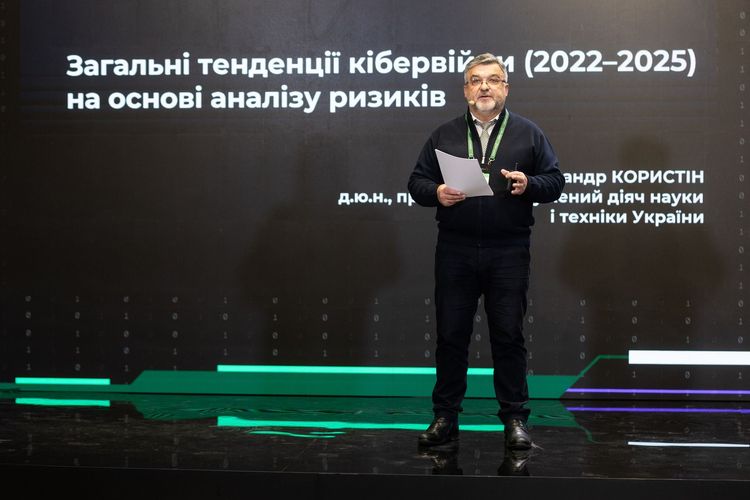
Cyber Warfare 2022–2026: From Chaos Tactics to Strategic Attrition I had the honor of presenting the analytical report of the Institute for Cyber Warfare Research at the main stage of the Kyiv International Cyber Resilience Forum 2026. Today, cyberspace is not an "add-on" to war; it is a full-scale theater of operations where Ukraine fights daily for the digital independence of the entire world. Our team presented a unique analytical model for risk assessment. Key takeaways from my speech: • Evolution of the enemy: We are witnessing the aggressor's transition from mass destructive attacks to deep espionage and cognitive operations. • Systemic gap: National coordination in Ukraine is at the highest level, yet there is a critical need to strengthen the resilience of local communities and individual cyber hygiene. • Energy sector under fire: The energy sector requires an immediate transition from passive defense to active risk management. My main conclusion: Our primary challenge today is not a lack of knowledge, but the unevenness of its implementation. Ukraine already has the analytical foundation; now is the time to transform it into the operational viability of every city, enterprise, and citizen. I am grateful to the organizers for this powerful platform and to my colleagues for the synergy. The cyber war continues, but we know our enemy and we are working ahead of the curve. Together toward digital victory! 
#CyberResilience #KyivCyberForum2026 #CyberWar #CyberSecurity #UkraineDigital #InstituteForCyberWarfareResearch
 

Read more
DIGITAL SECURITY AS A HUMANITARIAN TASK: THE UKRAINIAN VECTOR OF IOCTA IMPLEMENTATION

DIGITAL SECURITY AS A HUMANITARIAN TASK: THE UKRAINIAN VECTOR OF IOCTA IMPLEMENTATION

In today’s world, digital security increasingly emerges not only as a technical or law enforcement function, but as a complex humanitarian task that directly affects people’s lives, institutional stability, and societal trust. With the expansion of digital infrastructure—especially under conditions of war and hybrid threats—the need for a systemic understanding of online security has moved beyond narrow technical solutions. It has become an interdisciplinary challenge, where technology, law, ethics, social responsibility, and public policy converge.

Ukraine, facing full-scale aggression, has become a testing ground for new forms of digital vulnerability: from mass disinformation campaigns and targeted cyberattacks on critical infrastructure to the spread of online violence, phishing schemes, and manipulative content aimed at citizens, military personnel, journalists, and activists. In such circumstances, digital security is no longer just about technology—it becomes about protecting dignity, freedom, and vital stability.

Against this backdrop, the European IOCTA (Internet Organised Crime Threat Assessment) methodology, developed by EUROPOL, serves as an important reference point for systemic analysis of digital threats and coordination of interagency actions in the field of online safety. At the same time, directly transferring IOCTA into the Ukrainian context requires deep adaptation—taking into account not only the specifics of war, the legal framework, and institutional maturity, but also the humanitarian dimension of digital reality.

The digital environment has become part of the humanitarian landscape: it is where trust or fear is formed, support or isolation, informational resilience or loss of orientation. Accordingly, digital security analytics must not only identify risks, but also propose development scenarios that protect the human face within the technosphere. Analytical products must include ethical assessment, consider vulnerable groups, and offer solutions based on transparency, cultural sensitivity, and cross-sectoral collaboration.

In this context, Ukraine’s implementation of IOCTA can become a unique opportunity—not merely to integrate into European cybersecurity standards, but to demonstrate a model where security is viewed as part of the humanitarian agenda: the protection of life, freedom, civil rights, and development.

The aim of this article is to outline an analytical framework for such implementation, combining IOCTA’s conceptual approaches with the realities and humanitarian needs of Ukraine’s digital environment. The focus is on interdisciplinary analysis that incorporates legal, social, ethical, and analytical factors capable of ensuring resilience, transparency, and humanity in Ukraine’s digital space.

Methodological Evolution: From IOCTA to the Ukrainian Framework

The methodological evolution of digital analytics—from the IOCTA framework to a Ukrainian humanitarian model—reflects not only the adaptation of tools but a paradigm shift in thinking about the nature of digital threats, the role of analytics, and the values that guide it. Strategic analysis based on the IOCTA (Internet Organised Crime Threat Assessment) methodology, developed by EUROPOL, relies on centralized collection of law enforcement data, analysis of criminal group network activity, transactions, cryptocurrency flows, digital infrastructure, and methods of digital exploitation. Its institutional logic is oriented toward preventing organized crime, with key tools including network intelligence, forensics, threat categorization, and preventive assessments by offense type.

In contrast, the Ukrainian methodological framework—shaped under conditions of war, disinformation campaigns, and social tension—draws on a fundamentally broader field of sources: open data, expert interviews, humanitarian observations, social media, narrative content, and signals from communities. This enables not only the identification of threats but also an understanding of their impact on citizens, their emotional responses, levels of trust in institutions, and adaptive capacity. Comparative analysis shows that the Ukrainian model expands the analytical scope from technical assessment to holistic analysis of the social context of threats, which is crucial for strategic management of the digital environment.

A key innovation in Ukrainian analytical practice is the emergence of new criteria for analytical validity—emotional credibility, social relevance, and narrative depth. In the context of hybrid warfare, numbers and facts lose their power if they do not explain how information affects behavior, beliefs, and the psychological resilience of communities. For example, reporting on cyber incidents without analyzing the emotional response of the population or prevalent interpretations fails to provide a full picture of the effectiveness of the informational response. This shift—from formal accuracy to deep explanation—is fundamentally important in post-conflict risk governance.

Within this evolution, the concept of “trust analytics” is emerging, countering the classical “control analytics.” While IOCTA has historically focused on institutional response and monitoring, the Ukrainian model aspires to build cross-sectoral collaboration, where analytics becomes a platform for dialogue rather than vertical management. Trust analytics is based on openness, ethics, clarity, and citizen participation: it does not merely report threats but explains them, informs about consequences, proposes courses of action, and mobilizes collective response. This approach requires new formats: strategic briefs, multimedia cases, educational materials, and visualizations accessible to broad audiences.

Thus, methodological evolution is not only a transition from IOCTA to a localized model, but from formalism to humanism, from vertical analytics to partnership-based analytics, from the language of control to the language of co-participation. The Ukrainian school of digital analytics is emerging as a synthesis of technical precision and human depth, where data are not merely objects of analysis but tools for strengthening communities, resilience, and national development.

Analytical Ethics and the Humanitarian Dimension

Analytical ethics, as the foundation of a new humanitarian analytics in Ukraine, is being shaped in response to the challenges of post-conflict reality—where data are no longer neutral objects but actively influence trust, resilience, and collective action. In this context, digital analytics emerges not merely as a technical tool for processing information, but as a form of contemporary humanism—capable of protecting human dignity, ensuring freedom of choice, enhancing psychological endurance, and fostering cross-sectoral cooperation.

The guiding principles—dignity, freedom, resilience, cooperation—form the value-based framework of analytical practice. They define not only ethical boundaries but also strategic orientations: what is analyzed, for whom the analytical product is created, and what its format and tone should be. These principles are embedded at every stage—from data collection to the presentation of findings in a form that mobilizes collective action rather than generating fear or division.

Within the humanitarian approach, particular importance is placed on integrating emotional intelligence, social empathy, and psychological sensitivity into the methodology of analytical work. This means not only accounting for the psychosocial context of data, but also the analyst’s ability to detect nonverbal signals of anxiety, calls for help, or invitations to collaborate—contained in narrative materials, comments, and public discourse. Such analytical sensitivity ensures a higher level of relevance, as the results not only inform but also support, inspire, and create space for national dialogue.

Ultimately, humanitarian analytics does not reject technical precision—it complements it with ethical foresight. It seeks to ensure that every analytical conclusion contributes to strengthening human potential, social cohesion, and moral leadership in the recovery process. The Ukrainian school of analytics, grounded in this ethic, can serve as an example for other countries undergoing complex transformations and lay the foundation for new standards of professional culture in the digital age.

Multisectorality and Communicative Design

The multisectoral approach in contemporary Ukrainian analytics transforms it from a narrowly professional domain into a public strategic instrument—capable of fostering interdisciplinary interaction, enhancing citizen awareness, and contributing to institutional renewal. This evolution is driven by the need not only to respond swiftly to risks, but also to communicate them in ways that support democratic processes, social cohesion, and cultural identity in transitional and crisis contexts.

At the same time, this transformation reshapes the nature of analytical products—from technical reports to formats tailored to the needs of diverse audiences: strategic briefs for decision-making, case studies as examples of practical response, multimedia presentations for public discourse, and educational materials for building analytical literacy. This approach not only expands the communicative impact of analytics but also turns it into a tool for changing mindsets and behaviors.

In this context, the role of the analyst also evolves: they become not only a generator of data, but a communicator of meaning, a moderator of public dialogue, and a bearer of professional and humanitarian culture. The analyst begins to function as a mediator between spheres of knowledge, power, and civil society, helping to shape a shared language of strategic thinking. Their ability to convey complex information in an accessible, ethical, and substantively rich form becomes critically important for strengthening institutional trust, mobilizing collective action, and fostering sustainable development.

Ultimately, multisectorality and communicative design are not merely means of delivering analytics—they are key mechanisms for building an inclusive informational environment, where analytics serves not only as a source of solutions, but also of meaning, inspiration, and cultural leadership.

Practical Application: Cases, Models, Challenges

The practical application of humanitarian analytics in the Ukrainian context encompasses a wide range of scenarios that respond to the challenges of the digital age and post-conflict transformation. Among the most relevant areas are ensuring digital security for communities, countering disinformation, and providing strategic support for regional reconstruction processes. In each of these cases, analytics serves not only as a tool for risk assessment but also for mobilizing action, creating trust-based mechanisms, and supporting population adaptation to change.

The application of humanitarian analytics faces a number of systemic challenges. Key among them are low levels of institutional trust, fragmentation of cross-sectoral communication, and insufficient competence in ethical analysis among professionals. Overcoming these barriers requires the creation of an environment in which analytics is recognized not merely as a technical tool but as a shared value-based resource—a means of enhancing civic engagement, fostering critical thinking, and cultivating strategic culture.

In response to these challenges, a model of the Ukrainian school of analytics is emerging—one that integrates education, the development of strategic thinking, and the consolidation of the analyst’s societal role as an ethical communicator and cultural leader. This school is grounded in a multidisciplinary approach, where analytical skills are complemented by knowledge of humanitarian principles, practices of social listening, and the art of adapting complex information to the needs of diverse groups. Key components include simulation cases, strategic workshops, interactive modules on countering disinformation, and institutional strengthening of digital resilience.

Ultimately, the practical application of humanitarian analytics is not merely a matter of tools—it is the embodiment of a new type of professional responsibility, where the analyst becomes a driver of social renewal, a bearer of interdisciplinary dialogue, and an architect of trust in the digital environment.

Conclusions and Invitation to Action

The formation of a new identity for the analytical profession in Ukraine is not only an institutional process but also a cultural shift—one that combines technical competence with moral leadership. Analytics is no longer confined to data collection and classification; it is evolving into an integrative discipline that assumes responsibility for strategic thinking, societal empathy, and ethical foresight. In this context, the Ukrainian analyst emerges as a figure capable of merging digital expertise with a humanistic vision, shaping new standards of professional culture.

The creation of a morally and strategically grounded school of analytics is a key step in this process. It is not merely about expanding technical tools, but about laying philosophical foundations that define the meaning and purpose of analytical activity. Such a school should move analytics beyond narrow instrumental application and view it as a source of societal maturity, mutual responsibility, and trust-building in times of uncertainty. It must be based on a multidisciplinary approach, where economic, social, technological, and humanitarian dimensions are integrated into a unified framework of strategic vision.

In this light, an invitation to action is declared—to the academic community, government institutions, and civil society—to jointly cultivate a culture of thoughtful analytics. This culture entails not only high-quality information processing but also a deep reflection on its role in shaping social order, democracy, and human dignity. This invitation is an open call for co-participation, where each sector becomes not only a consumer of analytical products but also a co-creator, a bearer of strategic vision, ethical standards, and civic responsibility. Ukrainian analytics in this dimension is not merely a profession—it is a new form of service that combines precision of thought with depth of care.

 

Read more
THE PROFESSIONAL STRENGTH OF AN ANALYST: SEEING DEEPER, ACTING SHARPER

THE PROFESSIONAL STRENGTH OF AN ANALYST: SEEING DEEPER, ACTING SHARPER

On the occasion of the professional recognition day for law enforcement analysts in Ukraine

In a world where noise often outweighs substance, the role of the analyst becomes not just important—it becomes vital. Today we honor those who can see deeper, think strategically, and act responsibly. A law enforcement analyst is not simply a specialist in data and facts. They are architects of trust, engines of change, carriers of steady logic in a complex reality.

Analytics acknowledges: explanations are not always for everyone. But transparency is always the foundation of change. We don’t waste resources convincing those who refuse to listen. We focus on outcomes that speak for themselves. Analytics creates an environment where action—not emotion—drives progress.

True strength lies in analytical calm. Amid loud debates, it’s silence and precision that deliver results. We choose development over noise. Ukraine’s analytical community grows through depth, systems thinking, and the resilience of its values.

Maturity is revealed not through proof, but through deeds. Those who work with risk, conflict, and evidence every day choose dignity, integrity, and strategy. We don’t just react—we shape security policy, public order, and transparency.

Because analytics is a path. A way of thinking. The ability to see connections where others see randomness. It’s the intellectual courage to ask difficult questions and build the future based on meaning, not chaos.

And we know: analysis is not about persuasion—it’s about creation. We don’t seek applause or victory in debate. We create systems where decisions matter. Because substance always outlasts noise. And the community of analysts is crafting a new standard of justice in Ukraine.

With gratitude to everyone who chooses depth, precision, and principled action—today and every day. Happy professional day to you!

Read more
ANALYTICS AS A FORCE FOR CHANGE — BETWEEN ACHIEVEMENT AND THE UNSPOKEN

ANALYTICS AS A FORCE FOR CHANGE — BETWEEN ACHIEVEMENT AND THE UNSPOKEN

Despite the tense night in Kyiv and overwhelming informational pressure, we stand in formation. Eight years of law enforcement analytics in the National Police of Ukraine — much has been accomplished, yet much more lies ahead.


Still, professional analytics in law enforcement is not simply about data processing. It must become a core element of strategic, risk-oriented management and interagency thinking. And in these areas, we continue to lack necessary depth.


Analytical thinking is not an add-on to operations — it is the foundation of sound decision-making. Without strong strategies, institutional maturity, and interagency synergy, we risk losing more than just data. We lose efficiency and public trust.


These eight years represent enormous effort. But real progress is only possible when analytics evolves into an institutionally mature, structurally supported, and strategically integrated domain.
 

Read more